
6 Best Web Hosting Providers in Cambodia for 2025
If you’re choosing web hosting today -whether you’re a small business, creator, or startup globally (including Cambodia) - you need a provider that combines reliable uptime, fast hosting speed, transparent pricing, and responsive support.
In this roundup, you’ll find our top hosting picks for 2025, each tested and researched against real-world criteria such as speed, support quality, renewal pricing, and hidden limits.
Use this guide as a launch point to compare what truly matters - performance, scalability, and honesty in pricing - then choose the host that best fits your workload, traffic level, and budget goals.
How We Test
We evaluate hosting providers using a mix of performance, reliability, support, and transparency metrics to ensure our recommendations reflect real-world conditions and up-to-date data.
- Speed: We measure web hosting performance through key metrics like Time to First Byte (TTFB) and Largest Contentful Paint (LCP) where available.
- Uptime: We track reported uptime data and verify against SLA guarantees or third-party monitoring sources to assess reliability.
- Support: We assess response times, communication channels (chat, ticket, phone), and overall helpfulness for both pre-sales and technical issues.
- Pricing Transparency: We compare introductory vs renewal pricing, check for hidden limits (inodes, email quotas, bandwidth caps), and look for any migration or backup fees.
- Technical Stack: We review caching systems, CDN integrations, backup policies, and available data centre locations for proximity and performance relevance.
- Policy & Issues: We examine public documentation and community feedback for any recurring reliability, billing, or support concerns.
Because pricing and plans change frequently, all quotes and feature details were last verified in October 2025.
| Hosting Provider | Reviews | Overall Rating | Cheap Plans from |
|---|---|---|---|
1  Hostinger Hostinger | 57.6k+ |  | $1.95 / mo. 80% Off |
2  ChemiCloud ChemiCloud | 1.1k+ |  | $2.49 / mo. 78% OFF |
3  HostArmada HostArmada | 1.1k+ | | $1.49 / mo. -85% NOW |
4  Ultahost Ultahost | 844 | | $3.80 / mo. Flash Sale -40% |
5  SiteGround SiteGround | 25.9k+ | | $3.41 / mo. NOW -81% |
6  ScalaHosting ScalaHosting | 2.2k+ | | $2.95 / mo. -78% |
1. Hostinger
 57.6k+ 4.6 Positive Positive








| Storage | Bandwidth | Panel | Price | |
|---|---|---|---|---|
| 100 GB | Unlimited | cPanel | $1.95 / mo. | View Plan |
| 200 GB | Unlimited | cPanel | $2.95 / mo. | View Plan |
| 200 GB | Unlimited | cPanel | $3.49 / mo. | View Plan |
Hostinger - Best for Budget-Friendly Entry Websites
Quick Verdict
If you’re starting out on a tight budget and want a full-featured web host with solid performance, Hostinger offers excellent value for money. It’s beginner-friendly and fast for small sites, but renewal rates rise steeply and some plan limits deserve scrutiny.
Why Choose Hostinger
- Low entry cost: Among the cheapest introductory prices in hosting, making it ideal for small sites or creators on a budget.
- Beginner-friendly UX: TechRadar calls it “easy to use, fantastic features, and great value for beginners.”
- Global data centres: Hostinger operates servers across Asia, Europe, and the Americas — including nearby regions ideal for Cambodia and SEA users.
- Strong support reputation: Over 53,000 Trustpilot reviews averaging 4.7/5, frequently citing “helpful and patient” support agents.
- Good real-world performance: Cybernews describes it as “a solid pick if you value ease of use, fast servers, and reliability.”
Performance & Reliability
Hostinger’s hosting stack combines LiteSpeed or Nginx (depending on plan) with built-in caching for faster load times. Independent reviewers like Kripesh Adwani note “fast speeds, solid security, and good value,” though CDN performance is rated as average. TTFB and LCP data aren’t always published, but uptime averages around 99.9–99.96% in long-term monitoring.
For small or mid-sized workloads, this is strong performance. However, mission-critical eCommerce or high-traffic sites may need a higher SLA or dedicated resources.
Plans & Pricing Clarity
- Introductory pricing: From ~US$1.95/month (for 48-month terms) — among the lowest globally.
- Renewal pricing: Can rise several times higher after the first term — always confirm “renews at” rates on checkout.
- Inclusions: Free SSL, free domain (on select plans), and a simple website builder.
- Limits: Some shared plans cap storage, inodes, or email accounts — check regional plan details before purchase.
- Refund policy: 30-day money-back guarantee in most markets.
- Backups/migrations: Backups and migrations are plan-dependent — some tiers include them free.
Support Experience
Hostinger provides 24/7 live chat and ticket support (no phone support in most regions). Many users praise its responsiveness: “Hostinger’s support is very helpful and patient,” one reviewer shared on Trustpilot. Its knowledge base is extensive, covering setup, WordPress, and site migration. Advanced developer tools like SSH, WP-CLI, and staging are available on higher-tier plans.
Limitations / Gotchas
- Renewal pricing jump: Low first-term rates; renewal can be 2–4× higher.
- Hidden caps: Inode, email, or bandwidth limits on cheaper tiers.
- CDN performance: Average vs premium hosts, per reviewers.
- No phone support: Limited to chat/ticket channels.
- Resource ceiling: Not ideal for high-traffic or CPU-intensive workloads.
Best For
- Small business websites, blogs, or personal projects.
- Creators and startups who want low-cost, full-featured hosting.
- Users comfortable with long-term contracts for maximum discounts.
Not For
- High-traffic eCommerce or enterprise sites needing advanced resources.
- Users who prefer predictable, flat renewal pricing.
- Teams requiring phone-based or Magento-level technical support.
Pros
- Outstanding entry-level pricing and solid value.
- High customer satisfaction and responsive chat support.
- Beginner-friendly tools, control panel, and website builder.
- Global server coverage — excellent for Asia and Cambodia.
Cons
- Renewal pricing can jump significantly.
- Hidden limits on cheaper plans (inode, email).
- Average CDN performance compared to premium hosts.
- No phone support in many regions.
Citations: Hostinger, TechRadar, Crazy Egg, Cybernews, Kripesh Adwani, Reddit, Trustpilot, Website Builder Expert.
2. ChemiCloud
 1.1k+ 4.9 Positive Positive




| Storage | Bandwidth | Panel | Price | |
|---|---|---|---|---|
| 20 GB | Unlimited | cPanel | $2.49 / mo. | View Plan |
| 30 GB | Unlimited | cPanel | $3.49 / mo. | View Plan |
| 40 GB | Unlimited | cPanel | $4.49 / mo. | View Plan |
ChemiCloud - Best for Friendly Support + LiteSpeed Performance on Shared Plans
Quick Verdict
ChemiCloud combines LiteSpeed performance, friendly support, and daily backups to create one of the most approachable shared hosting platforms for small to mid-sized websites. It’s ideal for users who value support and simplicity, though inode limits and higher renewals are worth noting.
Stack Overview
Stack: LiteSpeed + LSCache
CDN: Cloudflare integration (varies by plan)
Data Centers: 19+ locations worldwide, including Singapore, Mumbai, Sydney, Dallas, London, Frankfurt, and Bucharest
Backups: Daily (retention varies by plan)
SLA: 99.99% uptime guarantee
Why Choose ChemiCloud
- Ease of use and support quality: ChemiCloud earns consistently high marks for customer care and chat responsiveness.
- LiteSpeed + LSCache stack: Faster WordPress/PHP performance than Apache-only hosts, optimized for caching and efficiency.
- Free migrations and daily backups: Included on all shared plans—ideal for peace of mind.
- Global reach: Multiple data center options across Asia, Europe, and the US make it easy to host close to your target market, including Southeast Asia.
- Cloudflare integration: Adds edge caching and DDoS protection for faster global performance.
Performance & Reliability
ChemiCloud publicly claims 99.99% uptime and maintains a live status page for transparency. Real-world tests and customer reviews report fast TTFB and stable speeds for typical small to medium workloads. Like most shared hosting, performance can dip under heavy concurrent load, so it’s best suited for modest traffic profiles.
Plans & Pricing Clarity
- Introductory pricing: Ranges from US$2.95–$4.49/month depending on plan and term.
- Renewals: Standard rates apply after the first term — plan accordingly.
- Backups: Daily backups included; retention varies by plan tier.
- Free features: SSL certificates, migrations, and a free domain on select annual terms.
- Limits: Inode caps per plan (approx. 250K / 350K / 500K) — important for media-heavy sites.
- Refund policy: 45-day money-back guarantee, longer than most competitors.
Support Experience
ChemiCloud provides 24/7 live chat and ticket support, praised for being quick and personable. They handle free site migrations and include cPanel on all shared plans. Developer tools (like SSH) are available on higher tiers. Their knowledge base is straightforward, covering setup, caching, and DNS configuration.
Limitations / Gotchas
- Renewal rates: Higher after the promo term — verify final renewal pricing at checkout.
- Inode caps: Can be restrictive for sites with many files or plugins.
- Cloudflare dependency: CDN is via Cloudflare (not an in-house system); inclusion varies by plan.
- Shared load handling: Not ideal for large-scale eCommerce or resource-heavy workloads.
Best For
- Small businesses and creators who want strong support and reliability.
- Websites targeting Asia or ANZ (Singapore, Mumbai, Sydney regions available).
- Users who appreciate daily backups and a longer refund period.
Not For
- High-traffic eCommerce or enterprise sites needing dedicated resources.
- Projects requiring very high inode capacity.
- Users seeking the lowest long-term cost without renewal increases.
Pros
- LiteSpeed + LSCache stack for faster page loads.
- Daily backups and free site migrations included.
- Global data center coverage (incl. Singapore, Mumbai, Sydney).
- Friendly, responsive 24/7 support.
- Generous 45-day money-back policy.
Cons
- Renewal pricing higher than promotional rates.
- Inode/file limits per plan can restrict large sites.
- Cloudflare CDN integration may not be fully managed on all tiers.
- Load tolerance suitable for SMBs, not large-scale traffic.
Citations: ChemiCloud documentation, customer feedback, Cybernews, and verified user reviews.
3. HostArmada
 1.1k+ 4.9 Positive Positive
| Storage | Bandwidth | Panel | Price | |
|---|---|---|---|---|
| 15 GB | Unlimited | cPanel | $1.49 / mo. | View Plan |
| 30 GB | Unlimited | cPanel | $2.47 / mo. | View Plan |
| 40 GB | Unlimited | cPanel | $2.96 / mo. | View Plan |
HostArmada - Best for Backup Depth + Many Data Centers at Value Pricing
Quick Verdict
HostArmada blends generous backup retention, a wide global footprint, and strong customer support — all at competitive introductory prices. It’s ideal for users who value safety and easy restoration options. However, renewal rates rise after the first term, and resource limits vary by tier.
Stack Overview
Stack: Cloud SSD/NVMe (LiteSpeed “Speed Reaper” on top tier)
CDN: Available (Cloudflare integration)
Data Centers: 11 shared DCs + additional VPS/DC options across US, Europe, and Asia-Pacific
Backups: Up to 21 daily restore points
SLA: 99.9% uptime (credit-based policy)
Why Choose HostArmada
- Backup-rich hosting: Up to 21 daily restore points, a rare inclusion in this price bracket.
- Global coverage: Shared and VPS hosting offered across multiple continents, including Asia-Pacific, Europe, and North America.
- Performance stack: The Speed Reaper plan uses LiteSpeed with integrated caching for higher speed; lower tiers use fast SSD/NVMe cloud storage.
- Responsive support: Customers consistently praise HostArmada’s fast and friendly support team for migrations and troubleshooting.
- Free features: SSL certificates, free site migrations, and cPanel access included.
Performance & Reliability
HostArmada guarantees 99.9% uptime with service credits for SLA breaches. Independent reviewers such as WPBeginner and Unite.ai report fast page-load speeds and stable uptime across shared plans, with occasional tests recording near-100% uptime in short windows. Performance consistency depends on the plan chosen—LiteSpeed tiers outperform standard stacks, particularly under load.
Plans & Pricing Clarity
- Introductory pricing: Competitive on long-term commitments; ideal for budget-conscious users.
- Renewal rates: Standard pricing resumes after promo—verify total cost before committing.
- Backups: Up to 21 daily restore points included, depending on plan tier—excellent for recovery assurance.
- Freebies: SSL certificates, free migrations, and cPanel access included.
- Limits: Standard shared-plan CPU/inode quotas apply; verify per plan.
- Refund policy: 30 days on shared hosting, 7 days for VPS—confirm for your term or region.
Support Experience
HostArmada provides 24/7 live chat and ticket support, with a solid knowledge base covering backups, DNS, and migrations. Users often highlight quick, personable responses and painless migration assistance. Phone support availability may vary by location or plan type.
Limitations / Gotchas
- Renewal uplift: Costs increase significantly after the promotional period.
- LiteSpeed availability: Only included in the top shared tier (“Speed Reaper”).
- Location constraints: Some data centers are VPS-only; confirm availability before checkout.
- Shared resource ceilings: CPU and inode caps apply, as typical for shared environments.
Best For
- WordPress and small business sites that prioritize data safety and restore flexibility.
- Users needing nearby data centers for regional targeting (e.g., Asia, Europe, US).
- Site owners who appreciate responsive 24/7 support.
Not For
- Mission-critical applications needing enterprise-grade SLAs.
- Teams requiring full phone support in all regions.
- Buyers expecting flat renewal pricing.
Pros
- Up to 21 daily backups — rare for shared hosting.
- Global data center coverage across 3 regions.
- LiteSpeed option on “Speed Reaper” plan for faster PHP/WordPress.
- Responsive, helpful 24/7 support.
- Free site migrations and SSL included.
Cons
- Renewal rates climb significantly post-promo.
- LiteSpeed stack only on top-tier shared plan.
- Some data centers are VPS-only (not shared).
- Typical shared hosting resource ceilings (CPU/inodes).
Citations: HostArmada documentation, WPBeginner, Unite.ai, and verified customer reviews (2024–2025).
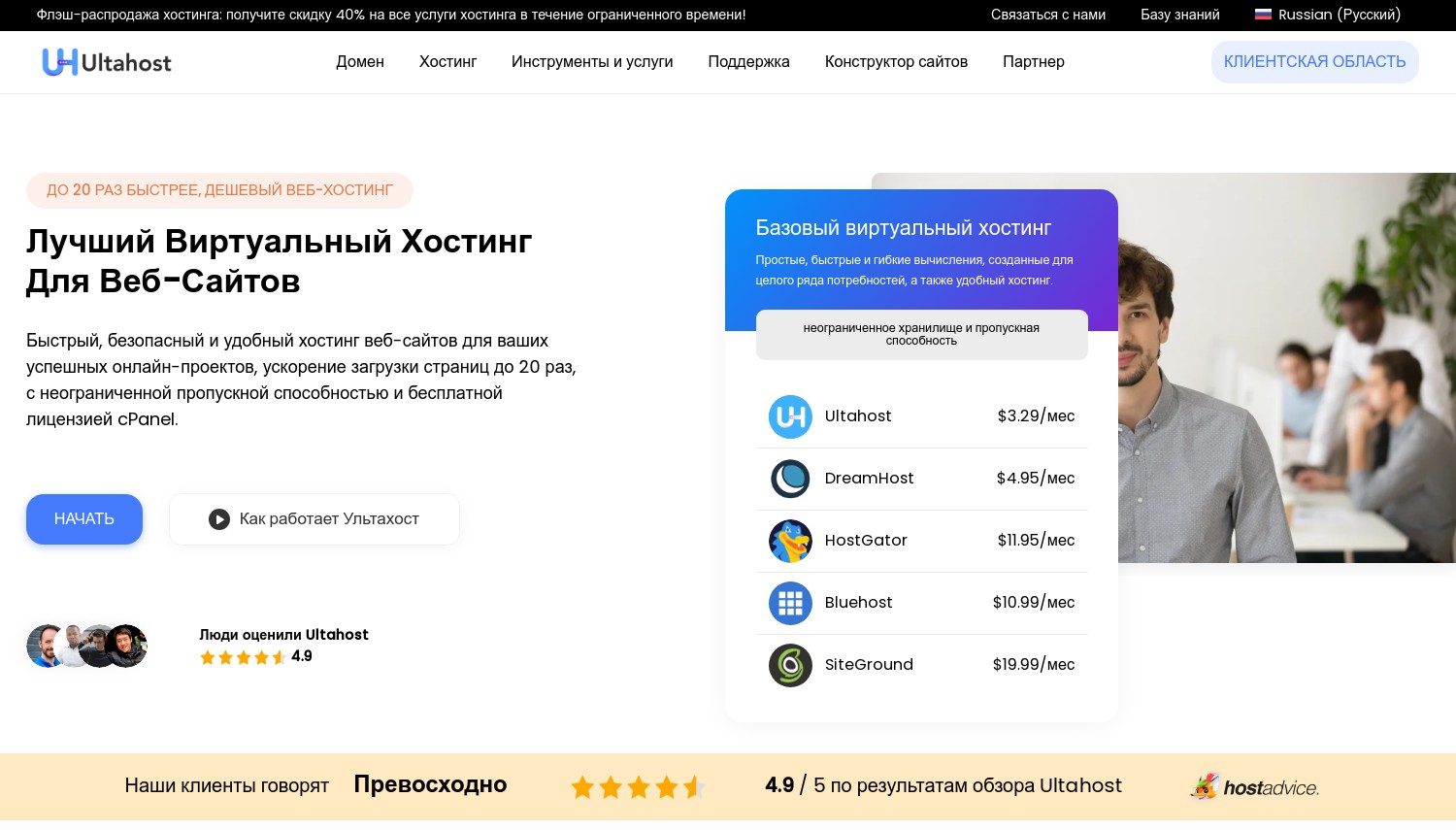
4. Ultahost
 844 4.6 Positive Positive
| Storage | Bandwidth | Panel | Price | |
|---|---|---|---|---|
| 30 GB | Unlimited | cPanel | $3.80 / mo. | View Plan |
| 60 GB | Unlimited | cPanel | $4.80 / mo. | View Plan |
| 80 GB | Unlimited | cPanel | $8.80 / mo. | View Plan |
UltaHost - Best for Aggressive Feature Lists (But Vet Performance & Support)
Quick Verdict
UltaHost packs in a ton of value - unmetered bandwidth, free cPanel, DDoS protection, and a huge global data-center footprint - all at budget-friendly intro rates. However, third-party reviews are mixed: some praise its speed and support, while others cite uptime or IP reputation issues. It’s best to test it thoroughly during the refund window before committing long-term.
Stack Overview
Stack: cPanel shared hosting on NVMe/SSD with caching and DDoS protection
CDN: Available / integrations
Data Centers: 30+ across EU, US, Middle East, and Asia-Pacific
Backups: Daily (varies by plan)
SLA: Advertised “100% uptime” (marketing claim - verify credit terms)
Why Choose UltaHost
- Feature-packed hosting: Includes unmetered bandwidth, free SSL, migrations, cPanel, and DDoS protection.
- Global coverage: 30+ data centers spanning Europe, North America, Asia, the Middle East, and Australia.
- Ease of use: Users on Capterra and Trustpilot often mention a simple UI and responsive chat support.
- Growing infrastructure: Expanded through 2025 with newer hardware and CPUs.
Performance & Reliability
Performance feedback is mixed. Cybernews and Hosting Consultant reported strong reliability and speed in recent tests, while WebsitePlanet found uptime inconsistency and shared IP issues (blacklisting, slower nodes). This split suggests server quality may vary across data centers. To mitigate risk, deploy monitoring tools (e.g., UptimeRobot) and use your 30-day refund window to test uptime and response time on your chosen server.
Plans & Pricing Clarity
- Introductory pricing: Typically around US$3–$4/month during promos.
- Renewal pricing: Higher after the first term; always verify at checkout.
- Refund policy: 30-day money-back guarantee for hosting (domains/add-ons excluded).
- Free features: cPanel, SSL, and migrations included.
- Resource limits: “Unlimited” bandwidth still falls under fair-use policies; CPU and inode limits apply.
Support Experience
UltaHost provides 24/7 chat and ticket support. Many users praise quick responses for simple issues, while some negative reviews note delays during outages or complex problems. Before purchasing, it’s wise to test pre-sales support with a few technical questions to gauge responsiveness and depth of expertise.
Limitations / Gotchas
- Mixed performance data: Conflicting uptime and speed reports across review sources.
- Marketing vs. SLA: The “100% uptime” claim isn’t backed by a clearly defined credit policy—request details.
- Email/IP reputation: Shared IPs may occasionally appear on spam lists; test deliverability early.
- Renewal pricing: Introductory deals end after the first billing cycle.
Best For
- Budget-conscious users who want maximum features per dollar.
- Websites that can test performance and uptime during the 30-day refund window.
- Users who prefer cPanel and unmetered bandwidth.
Not For
- Mission-critical or high-traffic business websites needing enterprise-grade uptime guarantees.
- Businesses that rely heavily on email deliverability from shared IPs.
- Users requiring credit-backed SLAs and fully transparent uptime guarantees.
Pros
- Generous features for the price (cPanel, SSL, migrations, DDoS protection).
- Large global data center footprint (30+ locations).
- Competitive introductory pricing.
- Many positive reviews cite quick, friendly chat support.
Cons
- Conflicting uptime and performance results in independent tests.
- “100% uptime” appears as a marketing claim rather than enforceable SLA.
- Renewal prices higher than intro offers.
- Shared IP reputation may impact outbound email deliverability.
Citations: UltaHost official documentation, Hosting Consultant, Cybernews, WebsitePlanet, and Capterra user feedback (2024–2025).
5. SiteGround
 25.9k+ 4.8 Positive Positive

| Storage | Bandwidth | Panel | Price | |
|---|---|---|---|---|
| 10 GB | Unlimited | cPanel | $3.41 / mo. | View Plan |
| 20 GB | Unlimited | cPanel | $5.69 / mo. | View Plan |
| 40 GB | Unlimited | cPanel | $9.11 / mo. | View Plan |
SiteGround — Best for WordPress Sites and Premium Support
Quick Verdict
If performance, uptime reliability, and responsive support are your top priorities—especially for WordPress websites—SiteGround is a standout choice. It delivers premium speed, stability, and excellent support, but expect higher renewal prices and some resource limits on shared plans.
Why Choose SiteGround
- Google Cloud infrastructure: SiteGround hosts all shared plans on Google Cloud for high reliability and global reach, making it ideal for worldwide audiences.
- Excellent uptime and performance: Cybernews reported “100% uptime during testing” and sub-1-second load times.
- Built-in WordPress tools: Includes SG Optimizer caching, free SSL, CDN integration, daily backups, and staging on higher tiers.
- Strong support reputation: Overwhelmingly positive Trustpilot feedback for fast, knowledgeable support agents.
- WordPress-centric stack: Automatic updates, staging tools, and safe plugin management simplify WordPress site maintenance.
Performance & Reliability
Independent reviewers like ToolTester note “top-notch uptime” and solid speeds. SiteGround’s performance suits small to mid-size WordPress sites extremely well, with quick response times and reliable availability. However, Online Media Masters cautions that high-traffic users may hit CPU or inode limits on shared or cloud tiers—potentially leading to throttling or 503 errors if resource caps are exceeded.
In summary: exceptional performance for most sites, but large-scale or high-traffic projects should validate capacity and cost first.
Plans & Pricing Clarity
- Introductory pricing: Shared hosting often starts around US$3.41/month for the first term (region-dependent).
- Renewal pricing: Jumps significantly (e.g., GrowBig renews around US$24.99/month or higher).
- Included features: Daily backups, free SSL, CDN, email hosting, and WordPress migration tools.
- Limits: Some tiers enforce inode/file-count or CPU usage caps—important for plugin-heavy or high-traffic WordPress sites.
- Refund policy: 30-day money-back guarantee on shared hosting.
Support Experience
SiteGround provides 24/7 live chat and phone support across most regions, earning high praise for quick, clear responses. The knowledge base is detailed, covering WordPress, backups, and performance tuning. Developers benefit from SSH, Git, and staging tools (on higher plans). Some reviewers note longer wait times or light upsell prompts on cloud plans, but support quality remains strong overall.
Limitations / Gotchas
- Renewal pricing: Attractive promos up front; steep increases afterward.
- Resource limits: Inode and CPU quotas can restrict heavy or plugin-rich sites.
- Storage constraints: Entry-level plans (e.g., StartUp) have smaller allocations (~10 GB).
- Less suited for non-WordPress tech stacks: LAMP-based but optimized for WP, not general-purpose apps.
- No root access: Managed environment restricts full system control.
Best For
- Small-to-medium WordPress websites prioritizing uptime and support.
- Agencies and freelancers managing multiple client sites.
- Users willing to pay more for a smoother, premium hosting experience.
Not For
- Ultra-budget users who can’t accommodate renewal increases.
- High-traffic eCommerce stores or enterprise sites needing large resource allocations.
- Developers requiring full root or unmanaged access.
Pros
- Excellent performance and 100% uptime in independent testing.
- Google Cloud-backed infrastructure with global data centres.
- Strong WordPress tools: caching, staging, migration.
- Daily backups and integrated CDN included.
- High-quality support with 24/7 chat and phone availability.
Cons
- Renewal pricing is significantly higher after intro period.
- Inode and CPU limits on shared plans can restrict growth.
- Limited storage on lower tiers.
- Less suited for non-WordPress or root-level use cases.
Citations: SiteGround, TechRadar, Cybernews, ToolTester, Online Media Masters, Trustpilot.
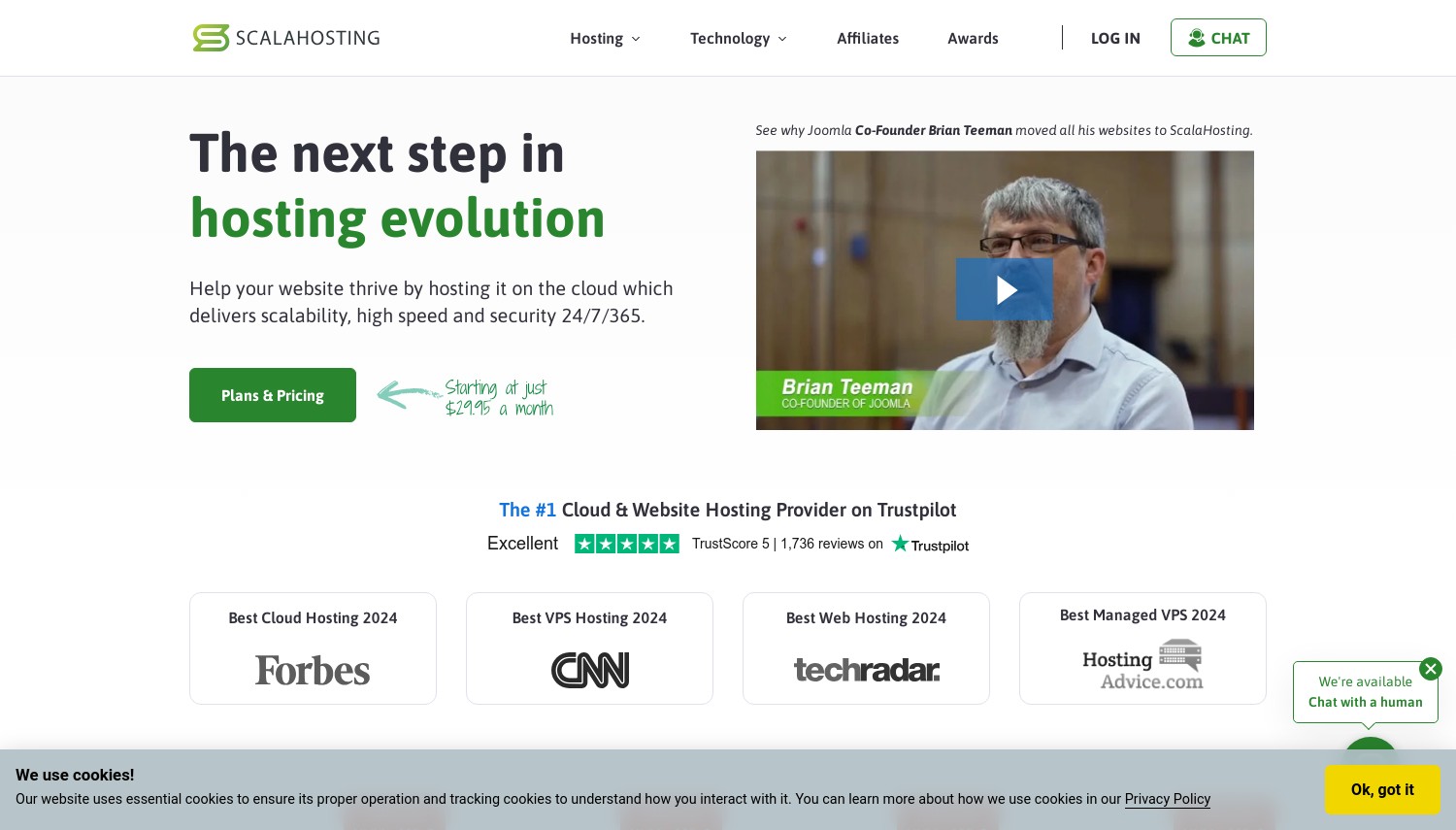
6. ScalaHosting
 2.2k+ 4.9 Positive Positive
| Storage | Bandwidth | Panel | Price | |
|---|---|---|---|---|
| 10 GB | Unlimited | cPanel | $2.95 / mo. | View Plan |
| 50 GB | Unlimited | cPanel | $5.95 / mo. | View Plan |
| 100 GB | Unlimited | cPanel | $9.95 / mo. | View Plan |
ScalaHosting - Best for VPS/Value Seekers Who Want SPanel + Human Support
Quick Verdict
ScalaHosting stands out for its managed VPS hosting, powered by SPanel (its in-house cPanel alternative) and SShield real-time protection. While its shared hosting is competent, the real strength lies in its scalable VPS performance, user-friendly SPanel environment, and responsive, human support.
Stack Overview
Stack: NVMe + high-frequency CPUs; web server varies by plan (LiteSpeed available)
Control Panel: SPanel (cPanel alternative) + SShield security suite
CDN: Integrated options available
Data Centers: Native (Dallas, New York, Seattle, Sofia) + AWS/DigitalOcean global footprint
Backups: Daily and on-demand (depending on plan)
SLA: 99.9% uptime guarantee
Why Choose ScalaHosting
- SPanel advantage: Scala’s proprietary control panel eliminates cPanel license costs while including built-in WordPress tools like staging, cloning, malware scanning, and WP-CLI.
- Integrated security: SShield offers real-time threat detection and mitigation.
- Global flexibility: Choose from Scala’s own data centers or deploy on AWS or DigitalOcean for global reach — including APAC options (Tokyo, Seoul, Singapore).
- Managed performance: Optimized VPS stack with free SSL, automated backups, and migration assistance.
- Human-centric support: Scala’s hallmark is live human support within seconds.
Performance & Reliability
ScalaHosting has earned strong performance scores across independent tests:
- TechRadar: Reported 100% short-term uptime and fast load times.
- CyberNews: Recorded ~443 ms response and 1.8s full load time.
- WebsitePlanet (2025): Verified 99.982% uptime over two weeks on VPS testing.
Overall, Scala consistently meets or exceeds its 99.9% uptime target, especially on managed VPS. Performance depends on region and backend (native vs AWS/DO), but it’s solid for mid-tier and growing businesses.
Plans & Pricing Clarity
- Shared hosting: Starts around US$2.95–$9.95/month promotional pricing; renewal rates higher.
- Managed VPS: Scala’s best value tier — SPanel included, saving cPanel licensing costs.
- Freebies: SSL, migrations, daily backups on most plans; on-demand backups on higher tiers.
- Refunds: “Anytime” money-back on unused prepaid periods (confirm at checkout).
- Limits: Standard shared quotas apply; VPS users can scale CPU/RAM/storage flexibly.
Support Experience
ScalaHosting emphasizes real human support within 15 seconds via chat. Reviews frequently highlight fast, friendly, and knowledgeable responses. Developer tools (SSH, Git, staging) are well-integrated, and SPanel’s WordPress tooling simplifies management while reducing plugin dependency.
Limitations / Gotchas
- Shared plans: Solid, but the best value lies in VPS tiers with SPanel.
- Feature variation: Some tools differ depending on backend provider (native vs AWS/DO).
- LiteSpeed: May be an optional add-on on VPS for maximum performance.
Best For
- Growing SMBs ready to upgrade from shared to VPS hosting.
- Teams who want SPanel + SShield convenience and cost savings.
- Global projects needing AWS/DO regions close to end users (e.g., APAC, EU, US).
Not For
- Ultra-budget users wanting only entry-level shared hosting.
- Those strictly tied to cPanel (Scala offers it at extra cost, but SPanel is default).
- Set-and-forget users uninterested in scaling beyond shared plans.
Pros
- SPanel + SShield integrated — cost-efficient and secure.
- Strong uptime and speed in independent reviews.
- Flexible deployment (Scala native, AWS, or DigitalOcean).
- Fast, personable human support.
- Free SSL, backups, and migrations included.
Cons
- Shared hosting is good but not the main draw.
- Features vary between provider backends (native vs AWS/DO).
- LiteSpeed requires an add-on for max performance.
Citations: ScalaHosting documentation, TechRadar, CyberNews, and WebsitePlanet independent tests (2025).
HowToHosting.Guide Selected Hostinger Reviews in Cambodia
 Trustpilot User from Cambodia
 Trustpilot User from Cambodia Trustpilot User from Cambodia
 Web Hosting - FAQ
What Is Web Hosting?
Web hosting is a service that stores your website’s files on an online server and makes them reachable when someone types your domain. Think of it as renting space on a high-availability computer connected to the Internet. The host also provides essentials like SSL certificates, backups, email, and security tools so pages load securely and reliably for visitors worldwide (including Cambodia).
How to Get a Hosting and Domain Name?
1) Choose a memorable, brand-safe domain (see: Google-Friendly Domain Name tips).
2) Compare plans and renewal pricing with the Hosting Finder Tool on this site.
3) Buy the domain and hosting (often bundled), then point DNS to your host.
4) Enable SSL (HTTPS), set up email (optional), and publish your site or CMS (e.g., WordPress).
Tip: Check for intro vs. renewal price differences, and whether migrations/backups are included.
Is It Better To Choose Local or International Hosting?
If most of your visitors are in a single country or region, pick a provider with a nearby data center for lower latency and faster load times. If you serve global traffic, choose an international host with a worldwide CDN (content delivery network) and multiple data centers. For Cambodia/SE Asia audiences, look for servers in Singapore, Jakarta, Tokyo, or Mumbai plus a CDN for worldwide reach.
Which Is Better - Paid or Free Hosting?
For business or professional sites, use paid hosting. You’ll get better uptime reliability, speed, support, backups, and security. Free hosting typically adds limits, ads, or resource caps that can harm performance and SEO. If budget is tight, start with an entry paid plan—just confirm renewal pricing and included features.
What Is Shared Web Hosting?
Shared hosting means your site shares one physical server (CPU, RAM, storage, IP) with other customers. It’s affordable and fine for small sites and blogs. Watch for common limits: inode (file count) caps, CPU seconds, or entry processes. If traffic or plugins grow, consider upgrading to VPS for dedicated resources.
What is VPS Hosting?
A VPS (Virtual Private Server) gives you a reserved slice of a powerful server (dedicated CPU/RAM/disk) with root or admin controls. It’s ideal when shared hosting slows under load or you need custom software. You can host databases, apps, and websites with far fewer “neighbor” effects than shared hosting—without the full cost of a dedicated server. See how it compares to dedicated: VPS vs Dedicated hosting.
What Is Dedicated Hosting?
Dedicated hosting gives you an entire physical server for your project—maximum performance, isolation, and control. It’s more expensive than shared/VPS, but best for high-traffic sites, heavy databases, or strict compliance needs. Budget for server management (or pick a managed plan), backups, monitoring, and a CDN. Compared to shared hosting, you’re not impacted by other tenants’ usage.
What Is Reseller Web Hosting?
Reseller hosting lets you buy resources in bulk and create individual hosting accounts for your clients under your own brand. It’s popular with agencies and freelancers who want to bundle hosting with web design/maintenance. Check for WHM/cPanel or SPanel access, white-label nameservers, automated billing tools, and clear limits on disk, bandwidth, and inode counts.