

Floodlights excel at lighting up big rooms and spaces. I have many around my home, and I bet you have a few, too. Upgrading to LED versions saves energy helps bulbs last for many years (which is great when replacing bulbs on high ceilings). Adding smart features lets you set schedules, change colors and even sync bulbs to music, upgrading your home in half a dozen ways.
Our Picks


SMART LIGHT BULB DEALS OF THE WEEK
- $114 (save $41)
- $16 (save $10)
- $27 (save $13)
- $24 (save $8)
After reviewing bulbs from GE Lighting, Philips Hue, Cree, Lifx and more -- and checking the results from our excellent CNET labs -- I’m ready to share my top picks for floodlight bulbs that can do it all. Here’s what I found.
Don’t miss any of our unbiased tech content and lab-based reviews. Add CNET as a preferred Google source.
What's the best LED floodlight bulb?
A Cync smart floodlight bulb on a wood surface.
After dozens of bulbs and hours of analysis, I’ve chosen the GE Cync Dynamic Effect bulb as our favorite smart LED floodlight. The bulb is effortless to set up and sports four quadrants to mix and match colors, and blending creativity with one of my favorite lighting apps.
I also picked bulbs for sheer brightness, dimming functions that skip complex app setup, and cheap replacements for many bulbs simultaneously -- take a look at the full list.
Best LED floodlight bulbs
Pros
- Amazing four-quadrant color-changing options
- Intuive app with no-hub access to Alexa and Google
- Scheduling, dimming and music syncing all available
Cons
- Comparatively very expensive at around $20
- Lower lifespan than some LEDs at 15,000 hours
Out of all the bulbs I tested, this floodlight bulb stood out as one that could do everything -- and then some extra things I didn’t know existed. The 9.5-watt bulb saves energy but is also packed with smart features, including the ability to change brightness and color with the app, as well as connect to both Alexa and Google Home right out of the box.
Other capabilities of this 750-lumen floodlight allow for scheduling, music syncing and the unique option to change each quadrant of the bulb to a different color for complex displays. That makes this Cync bulb ideal as an indoor centerpiece or overlooking an active patio/deck.
Who should get this bulb?
Light buyers who want the best, need top-performing smart features and want to dazzle with unique mixes of color that no other floodlight can produce.
Pros
- Excellent brightness test performance
- Durable performance
- Dimmable
Cons
- Many versions of these bulbs have a very cold color temperature
- Less suitable for indoor spaces
One of Cree’s floodlights performed amazingly well in our brightness tests, outscoring every other bulb we tried. While Cree no longer sells that bulb, it does offer this very similar model from the Exceptional Series.
Set at a 5,000K color temperature, this bulb is especially bright with a colder outdoor light made for extra-large spaces, while smaller indoor rooms are better suited with warmer bulbs. We chose the 650 lumen version, but you can find versions of this bulb up to 1,400 lumens.
Who should get this bulb?
People looking for a powerful bulb that can illuminate large spaces outdoors or in sheds, warehouses, etc.
Pros
- Excellent color and scene setting for beginners
- High 1,200-lumen brightness
- Dimmable
Cons
- Requires a hub for more advanced remote and voice assistance connections
- Expensive
Philips Hue bulbs have been in the smart home business for a long time, and their app certainly shows it, with easy routines and scene recommendations for certain colors that make management simple and fun even for newcomers. The 85-watt-equivalent light can also reach a high level of brightness.
The only issue with this bulb is that it focuses on Bluetooth out of the box and requires a Hue Bridge hub for remote control or connecting to platforms like Google Home.
Who should get this bulb?
People who want an easy-to-use smart light with intuitive scenes like mimicking daylight from sunrise to sunset but aren’t very interested in voice assistants.
Pros
- Affordable under $10
- Easy dimmable light if you have a dimming switch
- Light color warms as it dims
Cons
- No smart features
- Requires existing dimmable switch
If you’re looking for a reliable dimming bulb but aren’t interested in all the bells and whistles, this Philips 9-watt bulb is affordable at under $10 and offers up to 650 lumens of brightness. The soft white setting (2,200K to 2,700K) is ideal for indoor settings where brightness switches have already been installed.
I found the bulb easy to set up and ideal for vaulted ceiling lights, plus I liked how the color warms as it dims for cozier settings. It’s also rated for over 20 years of life at around 3 hours of use each day.
Who should get this bulb?
People with dimmable switches for indoor lighting in vaulted ceilings and similar spaces.
Pros
- Manual dimming and color temperature switches on bulb
- Extra-high 2,175-lumen brightness
Cons
- Extra-large BR40 bulb may not fit in all spaces
- No app controls
Ecosmart’s large bulb features useful manual dimming and color temperature. I was impressed with how easy it was to use the sliders on the bulb to switch between 2,700K to 5,000K color temperature and down to 10% brightness, no dimming switch needed.
The 13W bulb is a BR40 design, and while it fit in most of my sockets, it may be too large for some applications. It’s a great pick for outdoor use, and I found the on-bulb controls very effective, especially for warmer temperatures.
Who should get this bulb?
Buyers who want dimming options without a dimming switch, especially for larger outdoor purposes.
Pros
- Low costs around $4 per bulb
- Dimmable
- Disperses heat well
Cons
- Not as bright as many of our other picks at only 650 lumens
- Shorter warranty of two years
If you need to replace many floodlights and want to keep the cost as low as possible, then put the GE Basic floodlight LED at the top of your list. Available in a six- or 12-pack for around $4 per bulb, it's one of the lighting aisle's best values. Don't let the Basic branding fool you -- these bulbs are energy efficient, fully dimmable, durable and they manage heat surprisingly well.
Their light output isn't quite as bright as Cree and they won't last as long, but those trade-offs are fair at this price -- especially given that each energy-efficient GE Basic LED will pay for itself in energy savings in less than six months if you're upgrading your outdoor security lights or indoor LED floodlights from incandescent bulbs.
Who should get this bulb?
Buyers who need to replace a lot of floodlights at once and are looking for a low-cost option.
LED floodlight bulbs compared
| Best LED Floodlight Bulbs | GE Cync Dynamic Effects Smart Bulb | Cree LED Floodlight Exceptional Series 2-Pack | Philips Hue White and Color Ambiance LED Smart Bulb | Philips Dimmable Warm Glow BR30 Ultra Definition | Ecosmart BR40 Dimmable Bulb | GE Basic 65W Replacement Floodlight LED |
|---|---|---|---|---|---|---|
| Price per bulb: | $20 | $12.60 | $30 | $9 | $12 | $4 |
| Lumens/brightness: | 750 | 650 – 1,400 | 1,200 | 650 | 2,175 | 650 |
| Power draw/watts: | 9.5W | 8.5W | 12.5W | 9W | 13W | 10 watts |
| Color temperature: | Color customization | 5,000K | Color customization | Auto-customization when dimmed | Manual customization | 2,700K |
| Dimmable: | Yes | Yes | Yes | Yes | Yes (manual) | N/A |
| Lifespan: | 15,000 Hours | 25,000 hours | 25,000 hours | 25,000 hours | 25,000 hours | Approx 9 years |
| Warranty: | 3 years | 10 years | 4 years | 3 years | 10 years | 2 years |
| CNET review score: | N/A | 8.8/10 | 7/10 | 8.7/10 | N/A | 8.4/10 |
Other LED floodlights we've tested
- AmazonBasics BR30 Floodlight LED
- Cree BR30 Floodlight LED
- GE Basic BR30 Floodlight LED
- GE Reveal BR30 Floodlight LED
- Philips Warm Glow BR30 Floodlight LED
- Soraa Radiant BR30 Floodlight LED
- Sylvania High Definition BR30 Floodlight LED
- Target Up & Up BR30 Floodlight LED
- Walmart Great Value BR30 Floodlight LED
LED Floodlight Basics: What's a BR30?
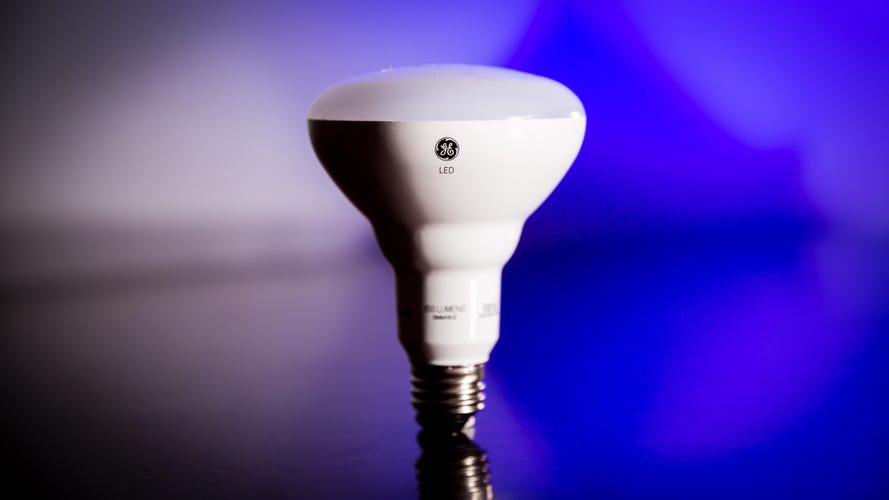
Typically used in overhead, recessed lighting setups, BR30 floodlights are designed to cast a wide pool of bright illumination in a single direction.
A BR30 bulb is a specific type of floodlight and one of the most common. The "BR" stands for bulging reflector, which means the light source inside of the bulb sits over a metallic, reflective bowl that bounces all the downcast light back up and straight out the top. Like the name also suggests, the top of the bulb typically bulges outward, which helps put out a fairly wide pool of illumination -- perfect for a security light or indoor floodlights. It's the same trick your car's headlights use to light up the road in front of you as you drive at night.
The "30" part refers to the diameter of the bulb in eighths of an inch. At 30 eighths of an inch, a typical BR30 bulb will be just shy of 4 inches wide.
What is ‘equivalent brightness’ in LED floodlights?
For maximum lighting, Eufy's three-panel floodlight cam lights the way.
While LED bulbs have been around for years, many people are still familiar with judging brightness by watts. Wattage doesn’t really work as a brightness measurement for LEDs, which use far less power and vary far more. Lumens is a popular option to talk about brightness, but its meaning can be vague and not everyone knows what to expect.
As a result, many LED bulbs are labeled with an equivalent brightness spec. It shows a wattage, not the actual wattage of the bulb but how bright an equivalent incandescent bulb would be at that wattage. When you see big, standard watt numbers on an LED bulb, it’s an equivalent sign of how bright you can expect to bulb to be (when not dimmed).
So how do you test light bulbs?
Our reviewers have spent years testing light bulbs in both our homes and CNET's excellent facilities. That includes hundreds of hours in our homemade lighting lab -- a climate-controlled room equipped with a spectrometer and an integrating sphere that lets us run the most scientific and accurate light bulb tests we can possibly run. I've also visited and written features about major North American lighting manufacturers such as Cree and GE to get a better understanding of their methods and standards.
A peek inside our integrating sphere.
In our labs, we load each bulb we test into the center of our integrating sphere -- a big, hollow ball with special, reflective paint coating the inside. Our spectrometer peeks in through a tiny hole in the side of the sphere, with a "baffle" that blocks it from looking directly at the light bulb. Instead, the bulb's light bounces around inside, which lets our spectrometer take reliable, calibrated measurements for things like brightness and color temperature.
We log those brightness measurements every 10 minutes for 90 minutes, then take a final reading at the end. At that point, I plug the sphere's power cord into a variety of dimmer switches, then measure for the average maximum and minimum settings across all of them while also keeping a close lookout for flicker or buzz.
Once a bulb we're testing is done in the lab, we take a close look at things like light spread, tone and color quality. We'll experiment with handling and any customization features or app controls that bulbs may offer, as well as watching for overall basics like heat output during use and easy of installation.
All of that said, the most important thing isn't what I think when I'm taking readings in our lighting lab -- it's what you and your family think after screwing the bulbs in and turning them on in your living room or other area. As I said, LEDs like these are designed to be durable and waterproof and last years, so it's well worth buying ones that you'll actually like living with. You've got a lot of good options these days, so there's really no need to compromise. I'm just here to help you find those "just right" bulbs a bit faster -- or more efficiently, you might say.
Factors to consider when buying an LED floodlight bulb
Cost
Some buyers may not mind paying $15 to $20 for a smart floodlight bulb that can do everything. Others have budgets in mind and aren’t interested in spending more than a few bucks per bulb to get replacements. Fortunately, we’ve got choices for both types of buyers, but you need to consider how much you’re willing to pay first.
Smart features
Do you want your bulb to connect to an app, or be controlled by a voice assistant? Some bulbs can connect to Wi-Fi on their own and provide many smart features, while others need a hub to do so, so check out the details first. If you use Siri, or Alexa or Google Assistant/Gemini, make sure the bulb supports that preferred voice assistant.
Beyond that, you could always smarten up any of the dumb bulbs recommended in this post by pairing them with a smart switch that's wired into your wall. If you've got a bank of floodlight bulbs overhead that are all wired to one switch, smartening up one switch instead of several bulbs might be the better way to go, anyway. The best I've tested is still the Lutron Caseta line of smart switches, but keep an eye out this year for new, relatively low-cost smart switches from GE.
Brightness
Learn the brightness level of your current floodlights and decide what you want to change. Lower brightness is easier on the eyes and better for indoor use. LED bulbs can often be seem very bright even at their equivalent wattage brightness, so you many want to choose a lower brightness if you’re moving from incandescent. Outdoor bulbs, meanwhile, often benefit from higher brightness to illuminate more of the evening darkness.
No matter what you pick, you'll want to look for a durable bulb that puts out at least 650 lumens of brightness from a power draw of 10 watts or fewer. I'd also advise sticking with a product that offers an average lifespan of at least 10 years and a warranty of at least five years, if possible.
Dimming options
Smart bulbs are a great choice if you're picky about dimming. With bulb-specific dimming hardware built right in, most smart bulbs will dim with flawless, flicker- and buzz-free precision via their app or through some other integration like an Amazon Alexa voice command. You won't need to use dimmer switches associated with those light fixtures at all. You might need to teach your kids to leave the switch up so your automations will work as planned.
Otherwise, we do have non-smart bulb picks for different kinds of dimming that cost a lot less if your light switch is already made for dimming bulbs.
Color temperature
Color temperature, typically measured in Kelvin, indicates how cold or warm a light’s appearance is. Lower numbers mean the light is warmer and closer to gentle candles (as well as to older incandescent lights, which are quite warm in color). Higher numbers mean the light is colder, clearer and usually looks brighter like the height of daylight -- or fluorescent bulbs.
LED bulbs used to be quite cold, but modern upgrades have given them a range of color temperatures. On smart bulbs, you can often shift the color temperature. Either way, it’s an important consideration: Homeowners typically prefer a very warm color temperature for any indoor lighting.
Color changing
If you want bulbs that can change color completely, you’ll want smart bulbs from Cync, Philips Hue and similar brands. Nothing else will allow you to set the color in the same way.
