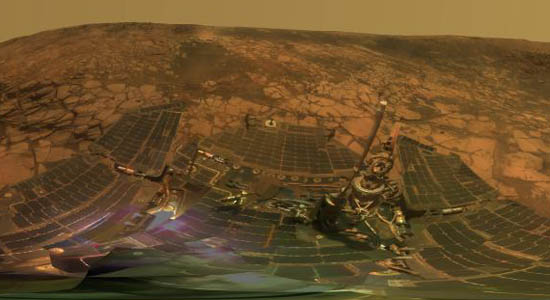
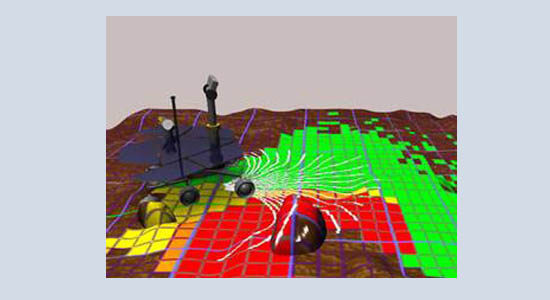
For five Earth years, the intrepid robotic explorers Spirit and Opportunity have been successfully conducting field geology at two different locations on the surface of Mars.
The United Nations Educational, Scientific and Cultural Organization (UNESCO) has chosen 2009 as the Internatonal Year of Astronomy. What makes this year special?
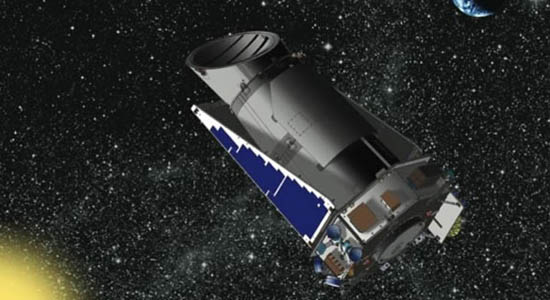
Kepler, a NASA mission launching in the spring of 2009, is a spaceborne telescope designed to survey distant stars to see how common Earth-like planets are.
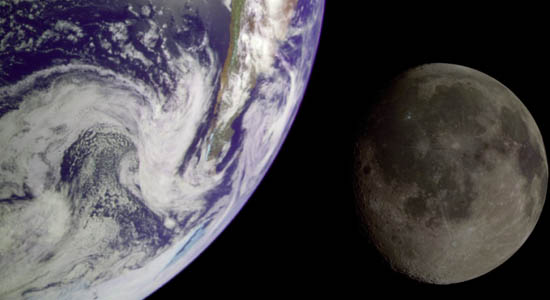
Several international space agencies are actively engaged in robotic as well as human exploration of the moon, including projects from China, Japan, India, Russia, Europe, Germany and the United Kingdom.
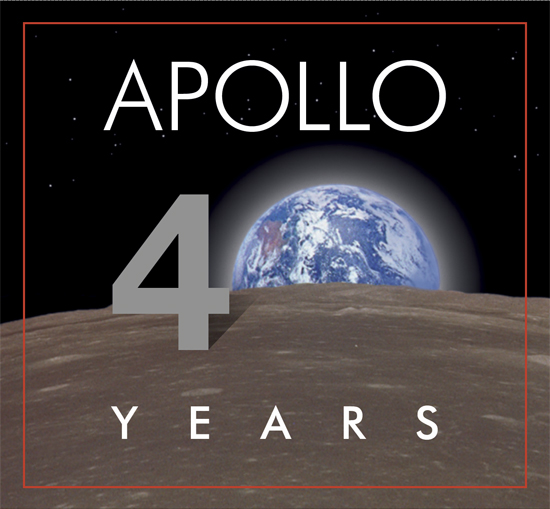
On July 20, 1969, Neil Armstrong and Buzz Aldrin made the first human footprints on the moon, and much of the work leading up to that historic walk was done right here in Southern California at NASA's Jet Propulsion Laboratory.
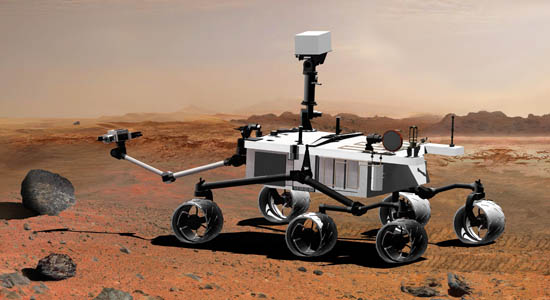
NASA’s next mission to Mars, the Mars Science Laboratory, will be landing with an extremely unusual landing system – a skycrane invented by the mission team specifically to land a large rover in scientifically exciting locations on Mars.
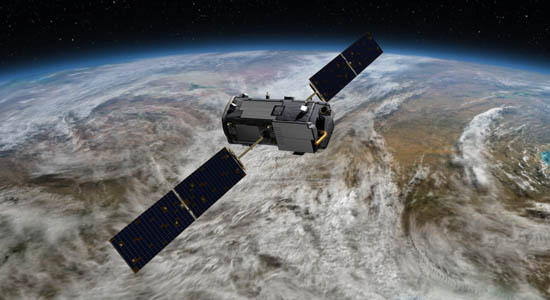
Carbon dioxide (CO2) is an efficient atmospheric greenhouse gas. Fossil fuel combustion, deforestation and other human activities are currently emitting more than 30 billion tons of this gas into atmosphere each year.
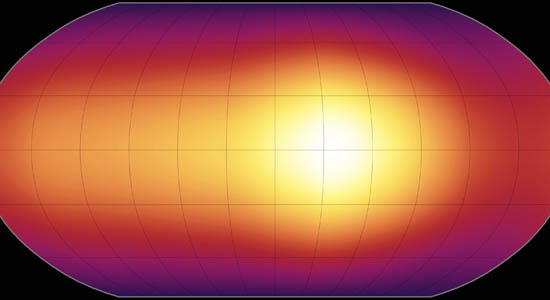
The last two years have seen extraordinary progress in the field of detecting and characterizing the atmospheres of planets circling stars other than the sun.
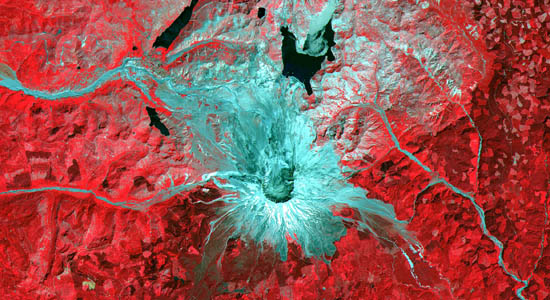
The U.S./Japan ASTER instrument has been taking pictures of Earth's surface since 2000. Dramatic changes are evidence of processes re-shaping our planet.

 Mar. 19 & 20
 May 14 & 15
 Jul. 16 & 17
 Jul. 20
 Aug. 20 & 21
 Sep. 17 & 18
 Oct. 15 & 16
 Nov. 12 & 13
 Dec. 3 & 4