The Hubble Telescope’s Wide Field and Planetary Camera 2 was one of NASA's most prolific science instruments, opening up our universe in way previously never before seen.
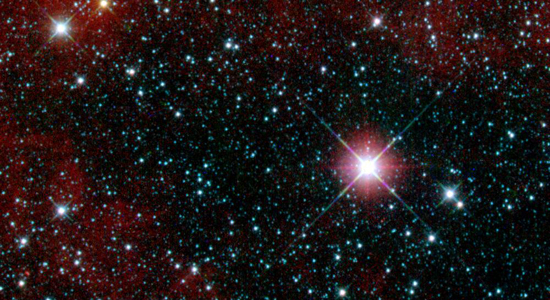
The Wide-field Infrared Survey Explorer (WISE) launched December 14, 2009, and a month later began surveying the sky in four infrared wavelengths, ranging from four to 30 times redder than our eyes can see.
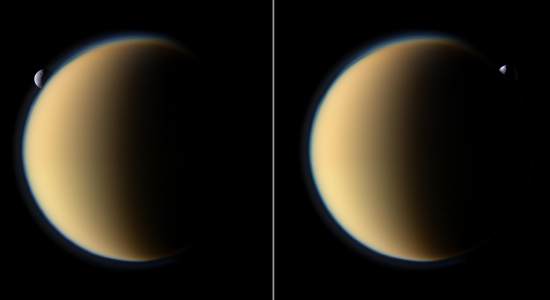
Our solar system has at least 170 moons orbiting the main planets. Before these moons were visited by spacecraft, astronomers expected them to be boring, dead objects devoid of any geologic features.
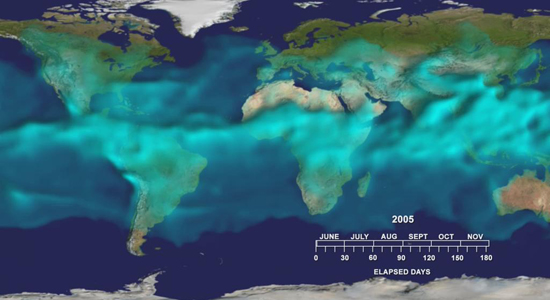
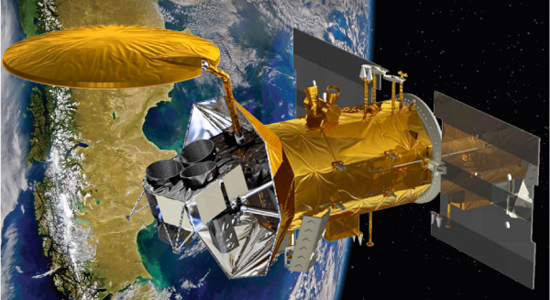
Our home planet is dominated by water, and in its many forms, the cycling of water and energy through the atmosphere and oceans is crucial to life on Earth.
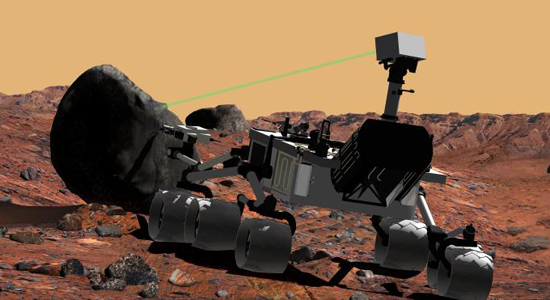
Due to launch in 2011, Mars Science Laboratory will investigate a landing site that shows clear evidence for ancient aqueous processes based on orbital data and undertake the search for past and present habitable environments.
The Spitzer Space Telescope, launched in 2003 as the infrared member of NASA's family of Great Observatories, completed the first phase of its scientific journey with the exhaustion of its liquid helium cryogen in May, 2009.
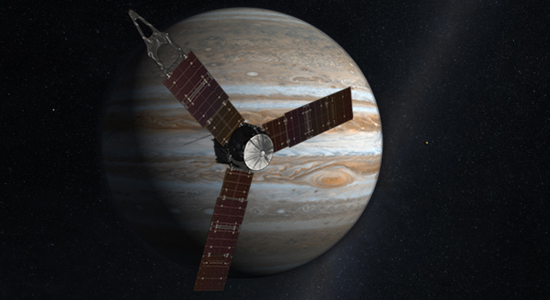
Peering down through the clouds and deep into Jupiter's atmosphere, Juno reveals fundamental processes of the formation and early evolution of our solar system.

 Mar. 18 & 19
 April 15 & 16
 July 22 & 23
 Aug. 19 & 20
 Nov. 11 & 12
 Nov. 2
 Dec. 9 & 10