



The Forest School
Connecting people, forests, and forestry for a sustainable future

Education and Research
Education and research centered in applied forest ecology and social sciences with a global scope spanning a spectrum of forest landscapes, geographies, and societies.
Training and Practice
A hub for practitioners and land stewards in forest-related fields worldwide, bringing together cross-disciplinary research in science and practice to find solutions to the challenges that face the world’s forests.
Our Priorities
Forests and Climate Change
Conducting innovative research, trainings, and multi-stakeholder dialogues to increase understanding and leadership on forest-climate interactions, forest resilience, and the role of forests in mitigating climate change.
People and Livelihoods
Engaging forest communities on stewardship, conflict resolution, and environmental justice through place-based knowledge and relationships with the land.
Sustainable Management
Leading the way in forest and natural resource management education, research, and engagement for more than 120 years.
Student and Alumni Impacts

Redefining Land Stewardship in Vermont
As program director for the Smokey House Center in Vermont, Walker Cammack ‘22 MF is helping redefine land stewardship by advancing research in forest farming, climate-adaptive maple syrup production, green building, and regenerative agriculture. His work emphasizes employing regional solutions — developed alongside local farmers, foresters, and researchers — to build ecological and economic resilience.
“We’re trying to do real work that helps people on a very local and regional scale, which is so nuanced and often chaotic in these volatile times we’re existing in, and it feels like YSE prepared me really well to be able to handle that,” Cammack said.

Bekenstein Climate Leaders
Landry Guillen
Goal: Integrating environmental justice with ecological stewardship
As a child, Landry Guillen ’25 MF lived near acres of farmland in California's arid Imperial County. The region is one of the country's leading agricultural producers but has been grappling with the effects of climate change, including persistent water shortages along the Colorado River.
While attending the University of California, Santa Barbara, Guillen worked at the university’s urban farm and food bank and that led her to realize that circular food systems can play a major role in climate solutions.

Three Cairns Scholars
Baboucarr Joof, The Gambia
Goal: Restore degraded forest habitat to combat desertification and achieve carbon neutrality goals
For the past seven years, Baboucarr Joof has worked as a forest ranger — surveying rivers and mangrove health, advancing community forestry initiatives, and measuring indicators for the UN Convention to Combat Desertification. Known as the global voice for land, the UNCCD promotes practices that avoid, reduce, and reverse land degradation, an issue to which Joof is deeply committed.

Stewarding Forests in the Face of Climate Change
Forests help mitigate climate change because of their ability to remove and store carbon dioxide from the atmosphere, but they become carbon emitters during wildfires. PhD student Reid Lewis '20 MF is researching how satellite data and machine learning models can help fire-prone forests become more resilient.
“When we make these forests more fire resilient, we can not only store more carbon, we can also help protect human communities, foster wildlife habitat, safeguard watersheds, and can use the process of restoration to partner with and empower Indigenous nations,” says Lewis.

Three Cairns Scholars
Bishwabandhu Acharya, Nepal
Goal: Model climate-related disturbance and integrate forest management strategies to develop nature-based climate solutions
Forest restoration through sustainable management practices in Nepal can advance nature-based climate solutions. Forest fires in the country, however, are altering composition and growth rates and making forests more vulnerable to disease. There were more than 5,000 wildfires in Nepal in 2024, and climate models predict the country will face more frequent drought conditions.
Bishwabandhu Acharya ’26 MFS is researching how disturbances such as fires impact the health and regenerative capabilities of forests.

Financing Community-led Climate Action in Africa
As a YSE student, Rita Effah ’12 MFS participated in COP 17 in Durban, South Africa. She says her experience at the annual U.N. climate change conference was the catalyst that sparked her interest in working to mitigate climate change impacts in Africa.
Now a senior climate finance officer at the African Development Bank, Effah is managing the Africa Climate Change Fund, which implements small grant projects in 28 African countries.

Fighting Fire with Fire
As wildfires across the U.S. and Canada continue to endanger human health and wildlife, Pete Caligiuri ’10 MF, forest strategy director for The Nature Conservancy in Oregon, is working on fire suppression.
And these efforts include setting fires. “Frequent, extreme wildfires are a threat, but fire has to be part of the solution. Fire always has been a part of these landscapes. Beneficial fire — like prescribed burns and managed wildfires — is essential to the long-term resilience of these forest landscapes into the future,” Caligiuri says.

Empowering Young Leaders
In July, Indonesia hosted the Y20 Summit, an annual gathering of youth leaders from G20 nations. This year's summit emphasized a sustainable and livable planet, and its recommendations will be presented at the upcoming G20 Summit in November. Caroline Tasirin ’19 MFS — a lecturer in the forestry program at Indonesia’s Sam Ratulangi University and co-founder of SULUT Semangat, a program that empowers Indonesian youths to connect with nature — represented the host nation and served as co-chair of the selection committee for Indonesia. “I'm proud to have contributed my insight and honored to collaborate with diverse youth leaders,” she says.

Rehabilitating Ghana’s Forests
After a decade as director of operations for Ghana’s Forestry Commission, overseeing the country’s commercial forest plantation development and land restoration, Hugh Brown ’10 MF was named chief executive of the Ghana Forestry Commission in 2025.
The Commission has begun the restoration of more than 450,000 hectares of degraded forests and planted millions of new trees under Brown's leadership — part of a major reforestation initiative by the Ghanaian government to contribute to global climate action.

Saving Brazil's Tropical Forests
Daniel Piotto ’06 MF, ’11 PhD was well into his career when a meeting with YSE Professors Mark Ashton and Florencia Montagnini inspired him to apply to the one-year Master of Forestry program.
Six years and two YSE degrees later, Piotto went on to join faculty of the then-new Federal University of Southern Bahia, where he has led numerous studies on forest restoration and plantation forests in the region.
“My experience at YSE was my formation into who I am as a scientist and a professor,” said Piotto, who still retains his YSE ties, hosting students in Bahia and teaching courses for the ELTI certificate program.
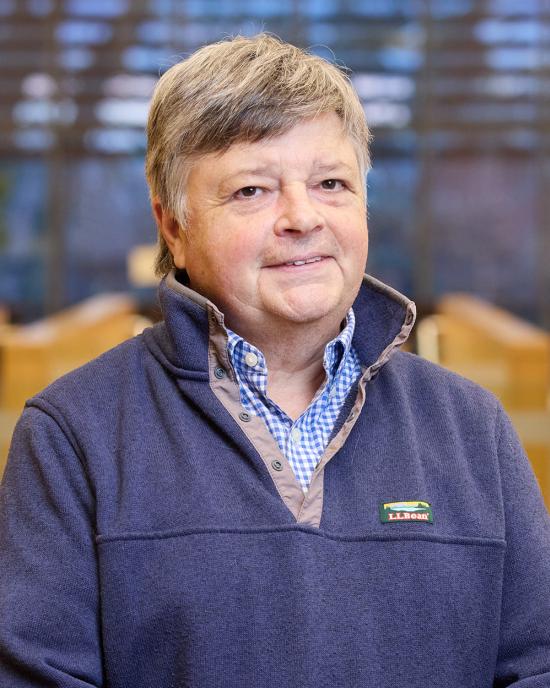
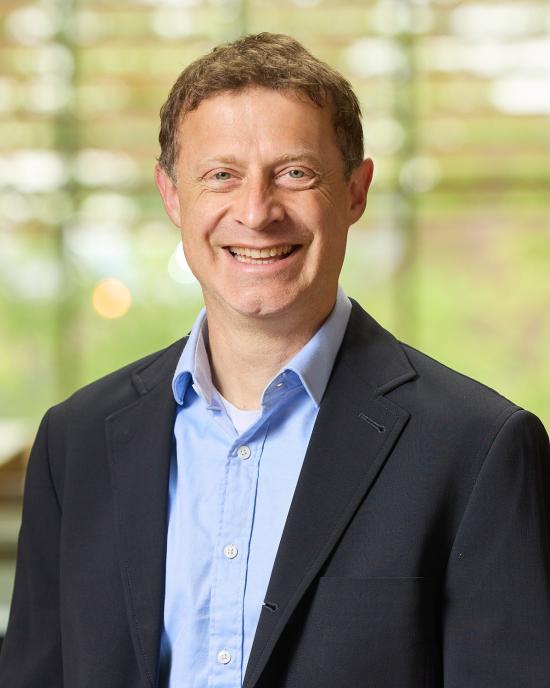
The Forest School Faculty
Centers and Programs
Centers & Programs
Yale Forest Forum (YFF)
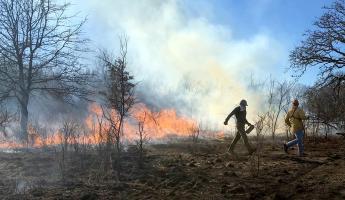
The hub of communications and engagement for The Forest School, the Yale Forest Forum brings together a diverse group of leaders in forestry and forest policy through regular events and programs.
Centers & Programs
Yale Forests
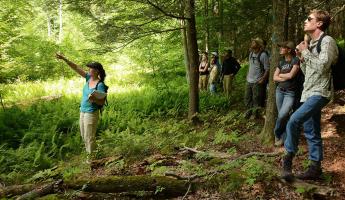
Our homes away from home, the Yale Forests manage 10,777 acres of forestland that provide educational, research, and professional opportunities to the Yale community and beyond.
Centers & Programs
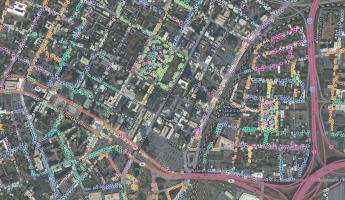
Urban Resources Initiative
Making New Haven cleaner and greener, URI works with local partners to plant trees, restore community green spaces, and build bioswales to filter stormwater runoff.
Centers & Programs
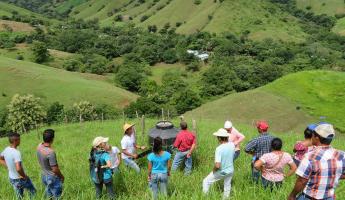
Environmental Leadership Training Initiative (ELTI)
In critical natural landscapes rich in biodiversity, ELTI empowers local leaders to design and implement land use practices and initiatives that protect tropical forests and the livelihoods of local landowners and their communities.
Centers & Programs
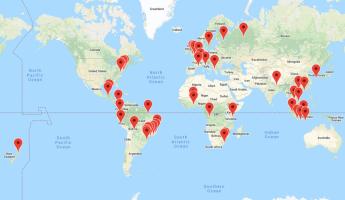
The Forests Dialogue (TFD)
The Forests Dialogue provides a platform for ongoing, multi-stakeholder conversations focused on collaborative solutions to challenges in achieving sustainable forest management and forest conservation.

Centers & Programs
Tropical Resources Institute (TRI)
The Tropical Resources Institute supports student research and on-campus programming aimed at solutions to complex challenges within the conservation and management of tropical environments.
Centers & Programs
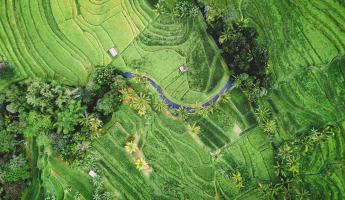
Yale Applied Science Synthesis Program (YASSP)
Centered on generating science to support decision making, YASSP produces quantitative, reputable, scientific syntheses that guide and inform direct actions around land stewardship.
Contact Admissions
Contact the Yale School of the Environment admissions team for more information about admission into the forestry-focused degree programs.
Contact The Forest School
