Spike in calls to firefighters 'linked to weather'

 PA Media
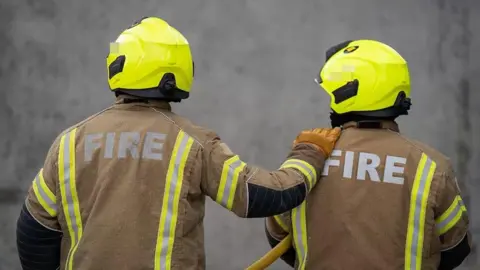
Firefighters in Staffordshire were called out to about 1,000 more incidents this spring and summer - a spike that is being linked to the hot, dry weather.
The county's fire and rescue service responded to 5,409 calls between April and September, compared to 4,436 during the same six-month period last year.
The situation was said to be driven by a 68.1% rise in secondary fires, which include most grass blazes that do not require a major response.
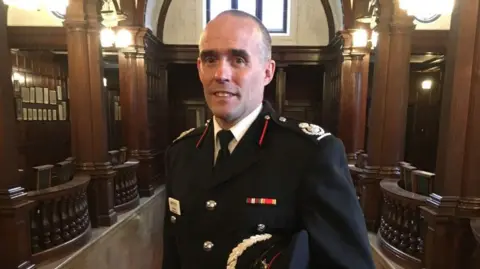
An increasing number of wildfires in Staffordshire was evidence "climate change is real", chief fire officer Rob Barber stated.
Over the six-month period, the service attended 1,794 secondary fires, which are generally small outdoor fires not involving people or property.
During a publicly-held performance meeting on Wednesday, the service's commissioner Ben Adams quizzed senior fire officers over the operational impact of the calls increase.
Mr Barber said while the surge affected response times, firefighters still arrived at 79% of incidents within standard time limits, against a target of 80%.
 Local Democracy Reporting Service
Demand peaked in August, with firefighters responding to more than 1,000 incidents and the average response time hitting 11 minutes 32 seconds, up from nine minutes 55 seconds in August 2024.
The increase in demand was said to also have had an impact on the service's finances, with a £400,000 overspend on pay being projected for the year, although the overall budget remained "on target".
Mr Barber said there had been an increase "across all of our incident types", which was closely related to a hot, dry year, with the conditions beginning in February and continuing until October.
"The most significant area of change was secondary fires, such as grassland fires, refuse fires and fires in derelict buildings," he added.
The service had conducted "a great deal of prevention activity" to try to reduce the likelihood of these fires, which included teams patrolling hotspot areas.
But Mr Barber added conditions meant "we still saw a number of secondary fires" and this was "a clear sign of climate change".
He also stated climate change was leading to increased demand for flood rescues.
In other data, there was a 19% increase in road traffic incidents attended by firefighters, from 364 to 433.
This news was gathered by the Local Democracy Reporting Service which covers councils and other public service organisations.
Follow BBC Stoke & Staffordshire on BBC Sounds, Facebook, X and Instagram.